If He Still Has a Fallback, He Was Never All In 

Note: You can watch a video version of this here.

 A viewer writes: Abel, what do you think about a widower that keeps an ex as a "friend" to pull back in when he is in between relationships or when his current relationship is difficult? If the friend were "the one" wouldn't the widower keep them in that place in their life instead of using the friend as a place holder when they are broken and lonely? 

What you're really asking is if she's being used--and she is. I'll get to that in a minute. But you're missing the more important question: why does he still need someone to fall back to?

 A man who keeps an ex on reserve isn't ready for a relationship. He's outsourcing his emotional life to someone he has no business leaning on, processing things with her that he should be working through alone, a therapist, or with his actual partner. A man who's done the work doesn't need a fallback because he's built something inside himself that holds. The fact that there's a "friend" on standby tells you exactly where he is emotionally and how important really are.

 A man who's ready doesn't keep a bench. If there's still someone waiting in the wings, he's not ready for commitment and there's no incentive for him to give his entire heart to someone when there's someone ready to support him when relationship challenges arise.

New Book Coming Soon

Just finished my latest book. I’ll release more details about it soon. What I can tell you is that it will be available before the end of the year. Stay tuned for more!

Stop Waiting for a Man Who Isn't Ready

Note: You can see a video version of this post here.

A viewer writes: "Abel, my widower has asked that we take a break so he can get help with his grief and put his life back together. How long should I wait?"

How long should you wait? Well, you shouldn't wait. Don't put your life on hold for a man who isn't ready to be in it. Taking a break to "work on himself" may be genuine but that's his journey, not yours.

While he’s getting his act together, live your life. Date. Have fun. Do things that help you grow personally and professionally. If he eventually does the work, gets his act together, and comes back — you can decide then whether you still want what he's offering. But that decision gets made on your terms, not from a place of having waited around hoping he'd show up.

Most importantly, when you wait, you don't get those months or years back. Don't give them to someone who isn't even in the relationship right now. The right man won't ask you to wait for him to decide if he wants a life with you. He'll already know.

Grief: The Origin Story, Not the Ending | How to Stop Being Stuck After Loss

There's a version of your life where loss defines you forever, and there's a version where it's the origin story and made you into someone your former self couldn't have imagined. This video is about the difference between those two movies, and the single decision that determines which one you end up in. If you've been stuck in grief, and some part of you already knows it's time, this is the permission you've been waiting for.

A widower, who lost his wife four years ago, posted on social media that he's still completely stuck in a life rut. Some examples he gave include:

  • Her closet is untouched, three rooms sit frozen in place, and he hasn't dealt with a single thing from the day she died.

  • He hasn't dated, doesn't feel worthy of anyone's time, and is losing the drive to even try to change.

  • He's raising four kids alone and feels completely disconnected — from his wife's presence, from himself, from any sense of what comes next.

Now this widower’s situation isn’t that uncommon, and a lot of people in the comments, many fellow widows and widowers themselves, were being kind and sympathetic to his plight. And, to an extent, I get that. But I want to talk about something that might actually help him, because kindness isn't always the same thing as truth.

Grief and loss are among the heaviest burdens a person can carry. Losing a spouse rewrites your entire life, including your routine, identity, and what the future looks like. In the months after loss, you deserve every bit of grace while you try to figure things out. But here's what nobody tells you: at some point, kindness, grace, and sympathy stop serving you and start protecting you from the very thing you need to do.

The people who recover from devastating loss and go on to build something meaningful all have one thing in common: at some point, they stopped identifying as someone who was grieving and started identifying as someone who was rebuilding. That shift doesn't mean forgetting their late spouse or whoever they lost, nor does it mean their grief isn't real or the loss profound. It just means they decided which movie they were the main character in: the one where grief is the permanent backdrop of their life, or the one where grief is the origin story.

Think about that for a minute. There are only two movies. In one of them, the house stays exactly as she left it, the closet stays untouched, the rooms stay frozen, and every day looks like the last. The main character—YOU—is defined by what he lost. In the other movie, the same loss happens — same grief, same pain, same love — but you use it to change for the better. Instead of being stuck, you start building something new out of the ashes. Same inciting event. Two completely different stories. The only difference is the decision about which one to be in.

Here's the truth: you already know which movie you're in. You don't need someone to tell you. When grief has gone on long enough, it stops being something happening to you and starts being something you're choosing—perhaps quietly and unconsciously—but it’s something you’re choosing nonetheless. The routines that keep you frozen, the spaces you haven't touched, the decisions you've stopped making, that’s infrastructure, but to keep your life from moving forward after loss.

Now, the good news is that what is keeping you stuck can be dismantled, and here are 3 steps to get you unstuck and become the hero in your own movie.

First, clear out what's keeping you stuck. Here's what happens after loss that nobody talks about: the physical world freezes. You stop moving things because moving things feels like erasure. You leave the closet untouched because opening it means accepting something you're not ready to accept. The photos stay exactly where they are, the clothes stay folded, the car stays parked — and every single one of those things sends your brain the same quiet signal: nothing has changed. But everything has changed. And surrounding yourself with evidence to the contrary doesn't bring them back — it just keeps you from moving forward. So look around and ask yourself honestly: is each thing a tribute, or a trap? Is it honoring the love, or is it holding the grief in place? Deep down, you already know the difference.

Next, break the routines that have become a substitute for living. Nobody tells you that grief has a rhythm. But it does. After a loss, you settle into patterns that help you survive — and for a while, that's exactly what they're for. They're scaffolding. They hold you up while you figure out how to stand on your own. But scaffolding is supposed to come down. Same chair, same show, same order to the day — at some point, the scaffolding becomes the structure, and you stop noticing it's there. The routines stop being something that helps you get through the grief and start being something that keeps you in it. So change something. Even something small. Not because the routine is wrong, but because you are capable of more than repeating yesterday. Every break in the pattern is proof that time is still moving — and so are you.

Finally, start making decisions again — because decisions are how you take back control. Here's the paradox of grief: at the very moment life feels most out of control, the instinct is to stop trying to control anything at all. Stop planning. Stop reaching out. Stop deciding. Because if you don't try, you can't fail. If you don't move, nothing can go wrong. But that instinct, left unchecked, hands control of your life over to inertia — and inertia is a terrible thing to be in charge of your future. So take it back. Pick up the phone and invite a friend to dinner. Sign up for a class. Find somewhere to volunteer. Take a trip. Give dating a try — not because you have it all figured out, but because doing something is how you remember that you're someone who can. You're not looking for instant transformation. You're looking to put your hands back on the wheel. Every decision, however small, is an act of reclaiming your life. And the people who come out the other side of real loss don't just survive it — they use it. They become someone their former self couldn't have been without it.

The movie worth being in isn't the one where loss defines you — it's the one where it forges you. Nobody's asking you to forget your late spouse or pretend the grief wasn't real. But you're still here. And while you're still here, the story isn't over. In one version of it, you stay in the same chair, in the same house, surrounded by the past — waiting for a life that isn't coming back. In the other, you become someone your former self couldn't have imagined: someone who was cracked open by the worst thing that ever happened and came out the other side bigger, stronger, and more fully alive because of it. That person exists. He or she is in you right now. The only thing standing between you and him is a single decision: to act or be acted upon.

I’m Abel Keogh, author of the book, Dating a Widower, and I’ll see you all next week!

Join My Early Reader Team

I’ve got several new books coming out later this year—fiction, a Christmas novella, and a new memoir—and I’m looking for a small group of early readers.

You’ll get a free advance copy before release in exchange for an honest review.

Spots are limited. If you’re interested, fill out the form below.

Life is Good and It's Happening Right in Front of You

Took my 10-year-old daughter out for some ice cream tonight at a nearby grocery store. This store is well known for its soft serve ice cream, and there was a long line when we arrived. There were college-age students on dates, families with their kids, and packs of teenagers looking for a low-cost sugar rush. We got our cones (I tried the cherry-dipped vanilla cone) and sat down at a table.

One of the college-age couples had a table nearby, and while I was talking with my daughter about her plans for the weekend (water-balloon fights and basketball), I watched them. It looked like a second or third date because they were asking more than just getting-to-know-you questions, but they didn't seem totally comfortable with each other. But they kept their phones in their pockets and talked the entire time I was there.

While we ate, more families, dates, and groups of friends came in, and most of them made a beeline for the ice cream counter. Even those who were there to shop for groceries grabbed a cone and walked around the store as they put stuff in their baskets. It was just a constant hum of people looking for a Friday-night treat to finish off the school and work week. People waited patiently in line, talked, and walked out with big cones and smiles as bright as the sun.

We finished up and followed a family with four young girls out the door, who chatted excitedly as they ate their cones. Their parents looked tired, and this seemed to be the promised activity before heading off to bed. And more people streamed into the store.

It was just another Friday night: kids laughing, couples figuring each other out, families squeezing in one last treat before bed. A quiet reminder that life is good—and it’s happening right in front of you.


6 New Video Shorts

I recently posted 6 new video shorts on my YouTube channel that cover topics from red flags to look for when dating a widower and what to do if the widower hides you from his kids and others. Links below. (Sadly, this blog platform won’t allow me to embed shorts for some reason.)

Enjoy!

Hiking The Vortex in Southern Utah

Hiked The Vortex on our anniversary trip to southern Utah, and it ended up being one of the highlights of the trip. If you’ve never done it, I highly recommend adding it to your list.

It’s not the most clearly marked trail out there, so you’ll want to keep an eye out for the cairns and probably have a decent hiking app handy to stay on track. But that’s part of what makes it fun. It feels a little more like an adventure and a little less like a crowded, well-worn path.

And once you get out there, the scenery makes the extra effort worth it. Southern Utah has a way of reminding you how big and wild the landscape really is.

If you go, just take your time, follow the cairns, and enjoy the experience. It’s a great hike.

The Vortex Hike Utah

The Vortex, March 2, 2026

Abel and Julie at The Vortex, March 2, 2026

The trail to The Vortex can be difficult to follow. Keep your eyes open for carins.

The mini vortex, a stone throw away from The Vortex. (March 2, 2026)

The last trail marker on the way to The Vortex.

My Kids Want Me to Live Miserably and Die Alone.

If you're a parent in that situation right now, I want you to hear this clearly: you don't need your adult children's permission to move forward with your life.

Imagine sacrificing twelve years of your life for your kids — and then having those same kids try to guilt you out of ever being happy again. That's exactly what's happening in this post, and it's more common than you'd think.

This post came from a widower on Reddit, and I want to walk through it because I think a lot of people are going to see themselves in this story.

My kids don't want me dating after my wife died

He writes that his wife passed away from cancer twelve years ago, leaving him alone with three kids. And listen to what he did — he never dated. Not once. He even admits that if he had tried, his kids wouldn't have approved anyway, so he just focused entirely on them. He gave them everything.

Fast forward to today. His oldest daughter is married. His two younger sons are in college and out of the house. And now it's just him. Every single day he leaves for what he calls his "soul sucking job," and every single evening he comes home to an empty house — exactly the way he left it. No warm meal. No noise. No one to come home to.

He's 48 years old and in good health, and he's finally started talking to a friend's divorced sister. They like each other. That's it. They're just talking.

But his friend's son — who happens to be close with his youngest — found out and told the kids. And now all three of them are angry at him for, in his words, "moving on." He says they just want him to keep living a miserable life to honor their mom.

Think about that for a second. They believe the only way to prove he loved her is to spend the rest of his life alone and miserable.

So here's what I want to say directly to his kids: You're a bunch of jerks

. Your father spent twelve years putting you first. Twelve years of coming home to that empty house, grinding through a job he hates, raising you on his own after an enormous loss — all while carrying a grief that most people can't even imagine. He did all of that for you. Without complaint. And now that you're grown, out of the house, and living your own full lives, he's supposed to just stop? Freeze in place? Keep the house quiet and the table empty forever as some kind of tribute to your mom? That is not honoring her. That is needless suffering — and you're the ones demanding it. That says a lot more about you than it does about him. Your dad loving someone new does not erase your mom. It does not mean he loved her any less, and it does not mean he's forgotten her. He can carry her in his heart for the rest of his life and still choose not to be alone. Those two things are not in conflict. So instead of policing how your dad is living his life, maybe focus on living your own.

And to the widower himself: It’s time to set some healthy boundaries with your kids. Their feelings are not a life sentence. You are 48 years old with decades ahead of you, and you deserve more than an empty house and a job you hate. You are allowed to want another fulfilling relationship — someone to come home to, someone to share the good days and the hard ones with. And here's something I really want you to hear: that is not a betrayal of your marriage. In fact, choosing to open your heart again, to keep living fully and completely — that's one of the best ways you can honor your late wife. It shows that the life you built together meant something. That love is worth pursuing again.

Your kids are adults. So are you. You do not need their permission to move forward and have a life.

And consider this: how you handle this moment will be the model your kids carry with them for the rest of their lives. One day, some of them may face loss too. And when they do, they'll remember what you did right now — whether you shrunk back to keep the peace, or whether you showed them that it's okay to keep living, to keep choosing life, even after grief. You raised your kids. You loved your wife. You grieved. You still get to have a future — just like they do.

I'm Abel Keogh, author of the book Dating a Widower, and I'll see you all next week.

Love and the Law of Sacrifice

There’s one reliable way to know how committed a widower really is to you and the relationship.

There’s one reliable way to know how committed a widower really is to you and the relationship. Any guesses?

Let me give you some clues: It’s not his words, it’s not his intention, and it has nothing to do with how much he says he loves you.

It’s something I call the Law of Sacrifice. And depending on how much a widower follows this law, you can know how committed he is to you and the relationship.

The Law of Sacrifice is simple: What someone is willing to give up—or change—reveals what they truly value.

In relationships, sacrifice answers a very specific question: What ranks higher than the person he’s committed his heart to—and what doesn’t?

Sacrificial actions cut through confusion quickly and easily reveal where the widower’s heart really lies

Now, the keyword in this law is 'willing'. Sacrifice can not be forced. It MUST be voluntary. If a change is demanded, negotiated, or dragged out of someone, it’s not sacrifice—it’s compliance.

Real sacrifice happens when someone chooses to give something up because the relationship matters more than their convenience. Let me give you three personal examples.

When I was dating Julie, I woke up before 5 a.m. and drove to her apartment and run with her every morning. Even though I’m a morning person, I didn’t enjoy getting up that early. I could have easily slept in until 6 and ran by myself. However, I did it morning after morning because I wanted time with her and wanted to participate in an activity she loved and was important to her. Most importantly, I was willing to give up sleep and a warm bed to get it.

As our relationship became more serious, I had to redefine relationships with friends and family that were getting in the way of us moving forward. Those conversations were uncomfortable. Some were painful. But I had them anyway because Julie mattered more than traditions or making everyone happy.

After we got engaged, I put my newly remodeled house on the market. Not because I had to, but because I knew the best thing for our marriage was to start fresh in a place that wasn’t tied to my past.

That’s what sacrifice does: It exposes priorities.

Words are cheap. Routines are easy. Sacrifice is often uncomfortable and that’s why it exposes people’s true feelings.

Without sacrifice, commitment is shallow. And shallow commitment doesn’t survive hard times. Deep sacrifice creates deep commitment. Let me repeat that: Deep sacrifice creates deep commitment. And if you both have a deep commitment to each other, the two of you can overcome anything life throws at you.

Now, some of you are probably thinking, Why is this all on the widower? Why does he have to be the one making sacrifices?

He doesn’t.

For a relationship to last, both people must make sacrifices.

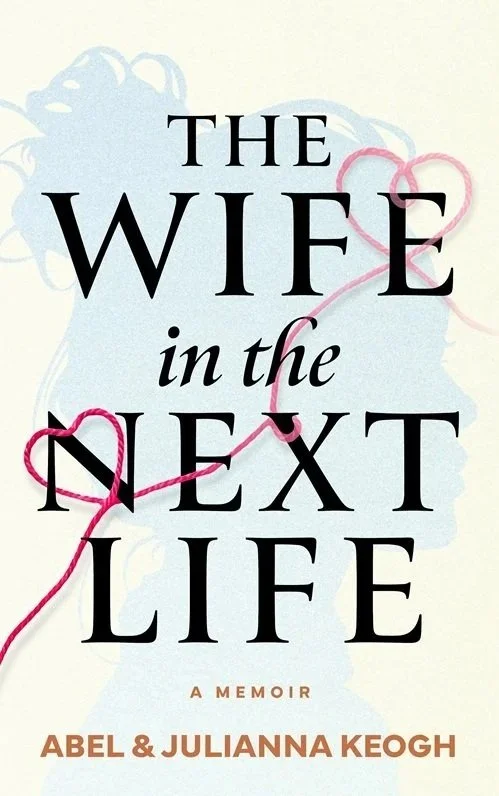
Julie made sacrifices, too. After we moved, she had to endure a much longer commute to and from work. She also married someone, knowing that a small part of his heart would always belong to someone else. (If you want the full list of her sacrifices, we share them in our book The Wife in the Next Life.)

The reality is that sacrifice will cause discomfort. It may bring loss and stress. It may even hurt. It may mean your entire life has to change. (And, let’s be honest—if an action doesn’t cost you something, it’s probably not a sacrifice.) But like all worthwhile things, the reward comes after the discomfort, the pain, and the hurt.

So here’s the bottom line: If you’re confused about where you stand with a widower—or anyone else—stop listening to what he says and start watching what he’s willing to give up.

Whatever he protects is his real priority. Whatever he sacrifices tells you where his heart really is. If he’s not willing to change his life for the relationship, then the relationship isn’t central to his life. And that clarity, even when it’s painful, frees you to make the right decision on what to do next.

I’m Abel Keogh, author of Dating a Widower: Starting a Relationship with a Man Who’s Starting Over, and I’ll see you next week.